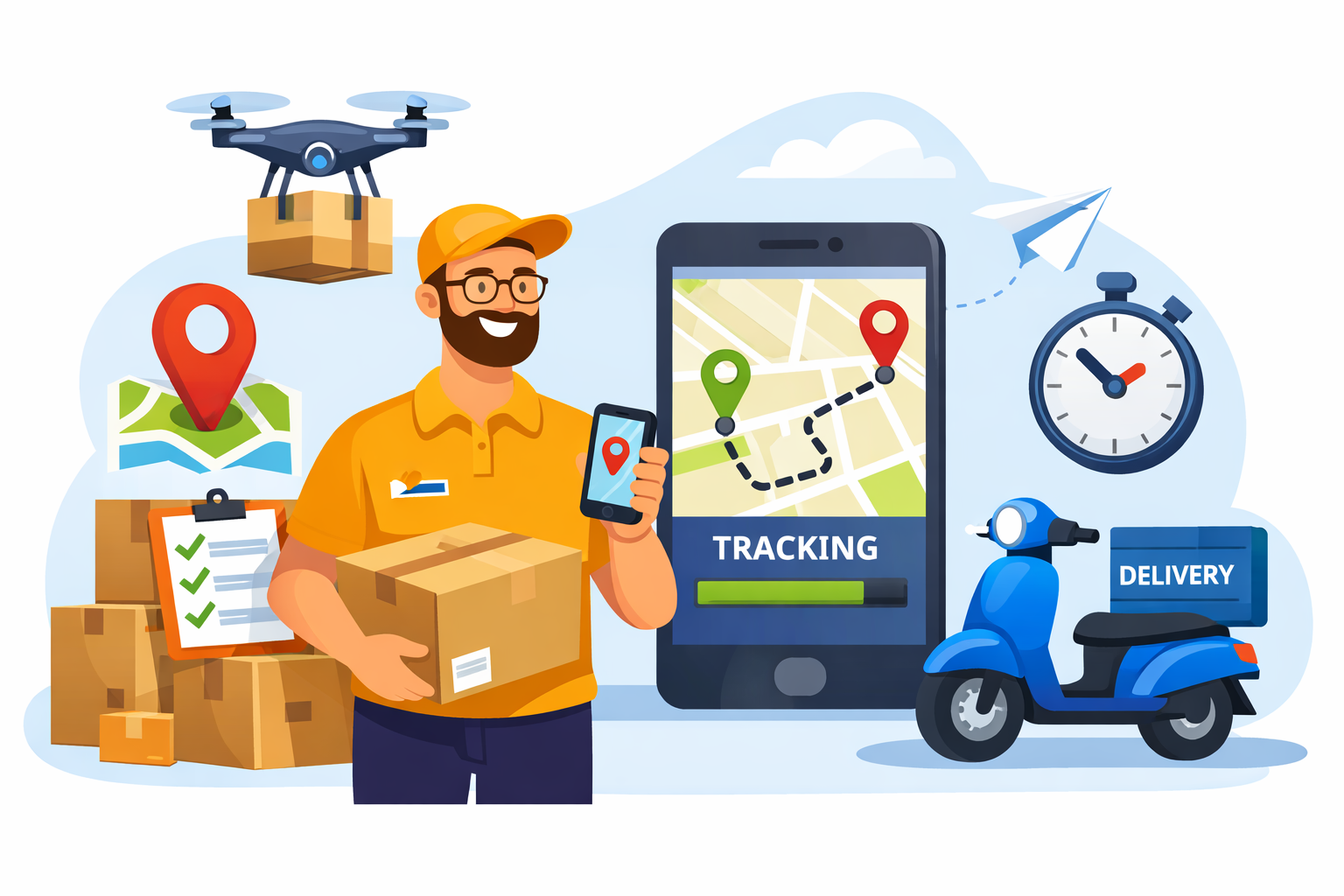
White delivery from China: how it works, how it differs from cargo, what mistakes companies make when importing, and why legal import is becoming the standard for 2025–2026.
Contents:
- What is white delivery from China and how does it work
- Why white delivery is becoming a necessity in 2026
- How to switch to white delivery: instructions from B2B-China
- Who benefits from official delivery
- Recommendations from B2B-China experts on legal import
Have you noticed that importing goods from China is becoming more complicated? Sanctions, increased currency control, endless checks at the border, and queues of trucks... Many entrepreneurs who previously used cargo are now asking themselves: is it worth switching to official delivery from China?
What is white delivery from China and how does it work
Official delivery from China (white scheme) is legal import with a full set of documents: contract, invoice, declarations, certificates, and official payment through a bank.
This method of import ensures transparency, business protection, and the ability to sell goods on marketplaces, in retail, and offline points.
Why white delivery from China is becoming a necessity in 2026
Import from China is facing stricter regulations. At the end of 2025, control was intensified at all stages. In China, export checks are now conducted at the exit, and upon entry into the Russian Federation, a full inspection is carried out at the border. This is the main reason why legal delivery of goods from China is becoming a necessity for companies that want to develop without risks.
What exactly happened?
-
Control from China
As of October 1, 2025, new requirements for export operations came into force in China. Now agents and sellers are required to provide actual details, invoice (fapiao), and product origin. Without fapiao, the Chinese side will not be able to confirm the export, and the delivery risks being blocked.
From this moment on, payment for goods from China under the contract and official payment of the invoice is the only reliable method.
Fapiao (发票) is an official Chinese tax document that serves as both a receipt and an invoice. It confirms payment for goods or services and is used by Chinese tax authorities to monitor the flow of funds.
-
Increased checks and queues at the border
At the Russian-Kazakh border in October 2025, several thousand trucks were delayed due to inspections. The goal of customs officers was to identify gray import schemes. Everything was checked - contracts, product origins, correctness of export declarations. Cargo shipments often fall under mass inspections, while official delivery passes faster and more reliably.
-
Rising costs and changing routes
Due to delays at the border, logistics chains are being restructured. Many carriers are choosing alternative routes with less control but longer travel times. As a result, white delivery can compete due to stability and predictability.
-
New import rules within the EAEU
A presidential decree from October 2025 allows temporary import of goods from Kazakhstan and Kyrgyzstan without a full set of documents, but establishes a mechanism for sorting, additional VAT charges, and checks after entering Russia. This legalizes the verification system, and unofficial import schemes will be under close scrutiny.
How to switch to white delivery: instructions from B2B-China
To work through official import of goods from China, it is important to build a transparent chain from supplier to customer.
How it works at B2B-China:
Step 1: Consultation and project analysis
Leave a request or write in the chat. We will select a format suitable for your business.
Step 2: Preparation of product data
You provide a table with item numbers, photos, a link to the supplier, or a technical specification for its search.
Step 3: Contract formation and invoice issuance
We form a contract in rubles, assist with payment to the supplier in China, and monitor currency transactions.
Step 4: Purchase and payment to the supplier
The goods are purchased directly from the supplier, export documents and fapiao are formed.
Step 5: Inspection and packaging
The goods arrive at the Chinese warehouse: we check, photograph, make a video report, and package for export.
Step 6: Transportation and customs
The cargo goes along the chosen route: by road, rail, or air. We ensure official registration, VAT control, and all payments.
Step 7: Delivery and closing documents
You receive a complete set of documents - certificates, acts for accounting and marketplaces.
Who benefits from official delivery
First of all, official delivery is beneficial for marketplace sellers. Internal checks on platforms have increased, so having a complete list of documents is essential to avoid blocking cards and stores.
Manufacturers importing components under contract reduce tax risks and gain the opportunity to work with large clients.
Official documents also increase partner trust if you are an offline retailer or distributor. However, in reality, this point applies to absolutely every entrepreneur planning to expand their business.
Recommendations from B2B-China experts on legal import
- Start with a small batch to test the white scheme and understand where costs can be optimized.
- Analyze routes: alternative checkpoints, combined routes (rail + road) can reduce delays.
- Allow time buffer for payment of goods, customs clearance, and logistics.
- Check suppliers. Require fapiao, licenses, and confirmation of the right to export.