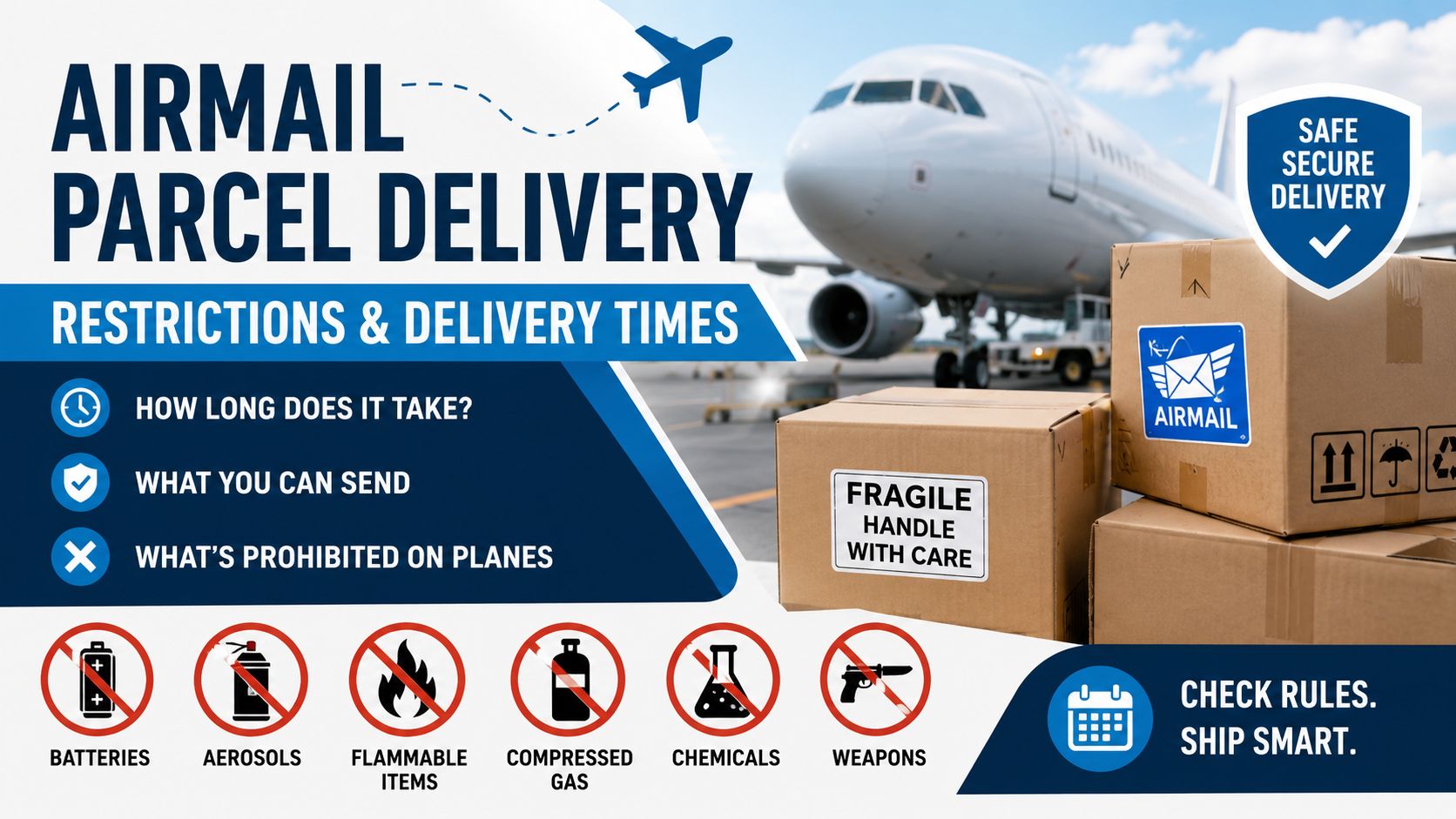
Aviation delivery is used on routes where the ground route takes too much time or is physically inconvenient. Most often, an airplane is used for shipping between remote regions, large logistics hubs, northern territories, and countries separated by great distances.
The sender does not always choose the transport independently. The route is determined by the postal or courier service taking into account the tariff, address, workload of sorting centers, and availability of flights. Even a shipment with an expedited tariff may travel part of the way by truck or train before getting on board.
Russia Post's aviation delivery is usually applied for express shipments, some first-class parcels, and international correspondence. The exact method of transportation depends on the specific destination. The inscription “expedited delivery” does not mean that the box will spend the entire route on the plane.
Why aviation is not faster on every route
The flight itself takes several hours. The main time is consumed by logistics to and from the airport: acceptance at the branch, sorting, inspection, forming a batch, waiting for the flight, and transportation to the final branch.
The duration is influenced by:
-
the distance between cities;
-
the availability of a direct flight;
-
the schedule of cargo and passenger flights;
-
the weather at the departure and arrival airports;
-
the workload of sorting hubs;
-
the need for customs clearance;
-
the inaccessibility of the settlement;
-
errors in the address or postal code.
A parcel from Moscow to Vladivostok can arrive faster than a shipment between two small towns in the same region. The reason is simple: there is a well-established air channel between the megacities, while the box still needs to be delivered to a small village by ground transport.
It is better to check the delivery time in the carrier's calculator before placing an order. The calculation shows an estimate, not a guarantee of arrival at a specific hour. The day of acceptance of the shipment often does not count in the control period.
How long does an air parcel take
There is no single timeframe for all destinations. Domestic expedited shipments between large cities sometimes arrive in a few days. Delivery to a district center, an island, or a northern village will take longer.
| Destination | Estimated timeframe | What may cause delays |
|---|---|---|
| Between large cities in Russia | 2–7 days | waiting for a flight, sorting overload |
| To a remote region | 5–14 days | weather, rare flights, ground leg |
| To an inaccessible settlement | 7–25 days | seasonal navigation, helicopter or winter route |
| International delivery | from 7 days | customs, transit hubs, country restrictions |
The numbers are needed for understanding the order, not for calculating a specific parcel. Two shipments of the same weight may travel by different schemes. One will get on a direct flight, while the other will be sent through an intermediate hub.
Why aviation is prohibited for some parcels
The main reason is fire and chemical safety. In the cargo hold, it is difficult to quickly detect a damaged battery, gas leak, or liquid ignition. At altitude, the situation is complicated by pressure changes, temperature, and limited crew access to the cargo.
Not only items that look threatening are considered dangerous. A regular power bank, a bottle of perfume, or a camping gas canister also falls under aviation restrictions. Such items are classified as hazardous cargo in the documents.
If the operator sees a risk, they can:
-
refuse to accept;
-
exclude air transport and send the parcel by ground;
-
request documents for the goods;
-
return the shipment;
-
forward the information for additional inspection.
Hiding a problematic item among clothes is a bad idea. Parcels undergo inspection, and the contents are checked against the declaration. An inaccurate description increases the risk of return and prolonged delays in sorting.
What cannot be sent by air
The specific list depends on the country, carrier, type of battery, composition of the substance, and method of packaging. Basic restrictions are similar for most services.
Batteries and devices with batteries
The most questions arise regarding lithium batteries. They can overheat, short-circuit, and enter thermal runaway—a chain reaction that releases a large amount of heat.
The following are often subject to restrictions:
-
individual lithium-ion and lithium-metal batteries;
-
power banks;
-
spare batteries for phones, laptops, and tools;
-
batteries for drones;
-
electric scooters, hoverboards, and other devices with powerful batteries;
-
damaged, swollen, or refurbished batteries.
A phone or laptop with a standard battery is sometimes allowed for transport if the requirements are met. Rigid packaging, protection against accidental activation, and short-circuiting are needed. The decision is made by the operator, so handing over a gadget without checking the specific service's rules is risky.
Cans, aerosols, and gas
A can is under pressure. When heated, damaged at the valve, or deformed, it can leak or explode.
Aviation restrictions affect:
-
gas canisters;
-
pepper spray;
-
camping cartridges;
-
refills for lighters;
-
aerosol paints;
-
some deodorants and household chemicals;
-
fire extinguishers;
-
cylinders with compressed gas.
Even an empty container sometimes raises questions if it cannot be confirmed that there are no remaining substances and pressure.
Flammable and chemically active liquids
Gasoline, solvents, fuel, some varnishes, paints, and technical compositions cannot be sent by air. Substances that can ignite, release toxic vapors, cause corrosion, or react with other cargo are prohibited.
Perfumes and fragrances with a high alcohol content are checked separately. Some carriers accept such goods only as declared hazardous cargo, while a regular parcel is opened.
Other problematic items
Fireworks, ammunition, explosive components, flammable matches, gasoline lighters with fuel, and dry ice without special documentation cannot be included in air shipments. Restrictions may apply to magnets, mercury, infectious materials, and equipment with residual fuel.
How to prepare a parcel without the risk of return
First, make a complete list of contents. Do not limit yourself to the wording “electronics” or “spare parts.” Specify the model of the device, the presence of a battery, its type and capacity if the operator requests this information.
Before sending:
-
check the list of prohibited items on the service's website;
-
clarify the rules of the destination country;
-
do not place a spare battery inside the device without agreement;
-
isolate the contacts of allowed batteries;
-
protect the device from activation;
-
use a sturdy box and cushioning filler;
-
honestly fill out the inventory or customs declaration;
-
keep the receipt, tracking number, and photos of the contents.
If in doubt, show the item to an employee before packing. Sometimes ground delivery turns out to be the only legal option. It takes longer, but the parcel will not get stuck in the air filter and will not be returned after several weeks of waiting.
Before handing over, double-check the current requirements of the carrier: rules for batteries, aerosols, and chemicals are regularly updated. Five minutes of checking saves much more time than dealing with a return from the warehouse.