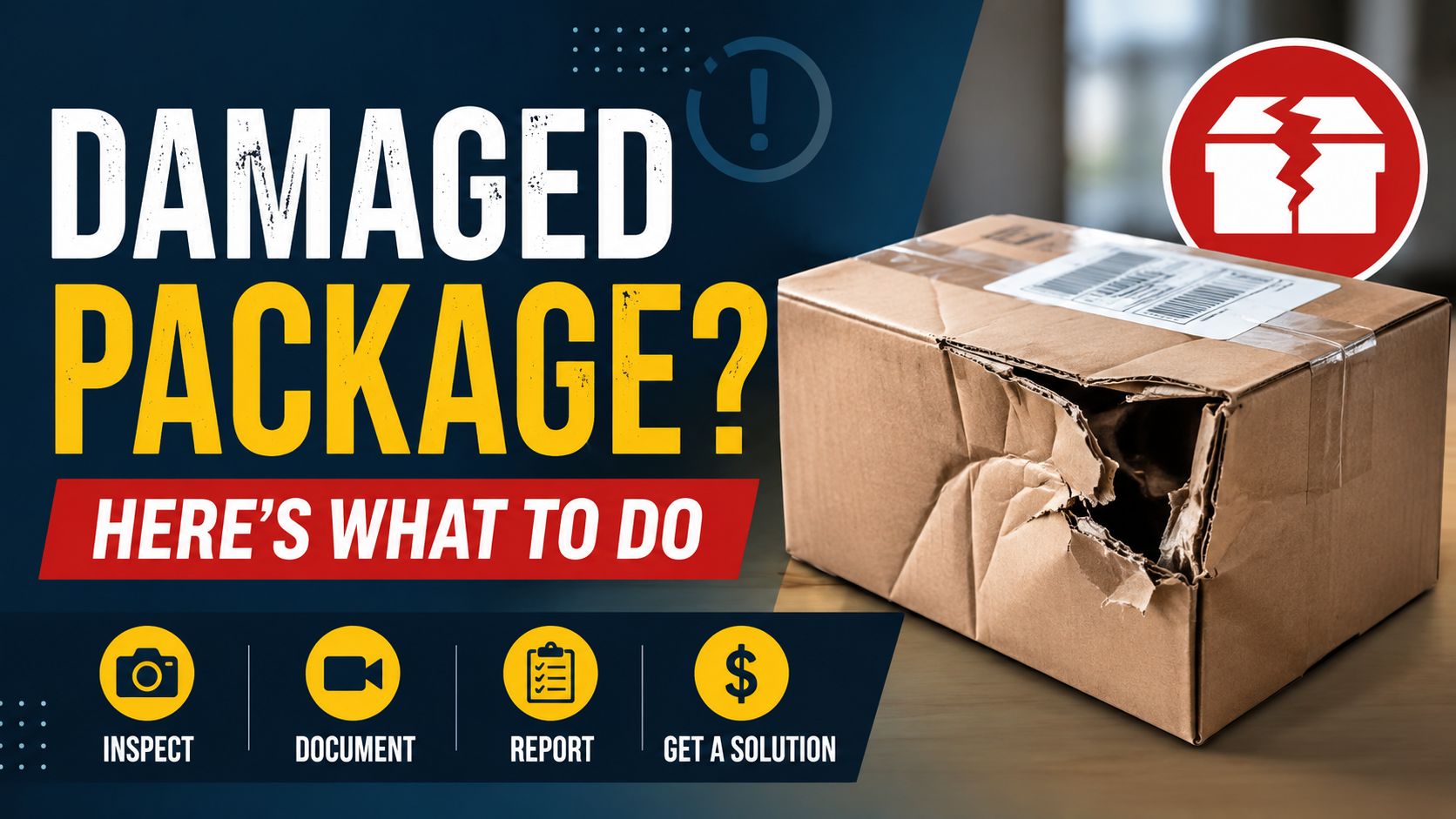
Damaged box — not just an ugly appearance. A dent, tear, wet cardboard, or signs of re-tape may indicate that the item inside is broken, deformed, or partially lost. When a package is damaged, the recipient's initial actions are crucial.
The main mistake is to silently accept the shipment, unpack it at home without recording, throw away the box, and then demand compensation. In such a situation, the seller or courier may claim that the item was damaged after delivery. Therefore, first, we document the facts. Only then do we sign the documents.
Inspect the shipment before acceptance
Do not rush to give the courier the code from the SMS or confirm receipt in the app. First, inspect the box from all sides. Check the bottom, corners, seams, sealing areas, and shipping label.
You should be alerted by:
-
deep dents;
-
punctures and tears;
-
wet spots;
-
severely crumpled corners;
-
busted seals;
-
double layer of tape;
-
damaged postal bag;
-
sound of shards inside;
-
suspiciously low weight.
Check the tracking number on the package against the order number. Sometimes labels get mixed up during sorting, so the recipient may receive someone else's shipment.
If the courier is rushing, calmly say that you want to check the condition of the cargo before acceptance. This is a normal procedure. Signing or entering a code confirms that you received the package, and the absence of remarks complicates any further dispute.
Record the box and unpacking on video
Photos are useful, but continuous video provides stronger proof. Start recording before opening the package. Show the box in its entirety, the shipping label, the tracking number, and all visible defects.
It’s better to film the unpacking in one take:
-
Record the closed box.
-
Show the damaged areas up close.
-
Remove seals and tape.
-
Carefully open the package.
-
Show the internal filler.
-
Inspect the item from all sides.
-
Document cracks, chips, or dents.
-
Record the serial number and configuration.
Do not throw away cardboard, bubble wrap, foam, bags, and seals. The seller or carrier may request the packaging for inspection. It shows whether the item was properly secured inside and whether it could have been damaged during transport.
Request to draw up a damage report
If a defect is discovered at the pickup point or with the courier, demand to draw up an inspection report. In different services, the document may be called differently: damage report, non-conformity report, commercial act, or cargo acceptance report with remarks.
The document should specify:
-
tracking number;
-
date and place of receipt;
-
condition of the outer packaging;
-
presence of signs of tampering;
-
damage to the item;
-
missing items;
-
employee details;
-
signatures of the parties.
Avoid vague phrases like “the packaging shows signs of transport.” Specificity is needed: “the left corner of the box is crumpled,” “the screen is broken,” “the case is cracked,” “one item is missing.”
Take a photo of the completed report. If possible, obtain a paper copy or request to send the document to your email.
When it’s better to refuse acceptance
If the item is broken, soaked, opened, or partially missing, it’s safer to refuse the package. Indicate the reason for refusal in writing. Do not use phrases like “didn’t fit” or “changed my mind,” otherwise the damage to the cargo will not be documented.
Refusal is especially reasonable if the contents include:
-
electronics;
-
household appliances;
-
glassware;
-
collectibles;
-
fragile parts;
-
expensive spare parts;
-
equipment with factory seals.
A slightly crumpled box does not always mean a damaged item. If the contents are intact, the completeness matches, and the equipment turns on and works, the shipment can be accepted. It’s better to keep the unpacking video until the return period ends.
Who to send the complaint to
The recipient does not always understand who is responsible for the problem: the store, marketplace, post office, or transport company. Focus on where the order was placed and who organized the delivery.
| Situation | Where to contact |
|---|---|
| Item purchased from an online store | To the store and delivery service |
| Order placed on a marketplace | Through return or dispute in the personal account |
| Package sent by an individual | To the sender and carrier |
| Delivery ordered by the recipient | To the transport company |
| Cargo was insured | To the carrier and insurer |
If the seller organized the delivery, start with them. The store should accept the complaint, offer a replacement, refund, or explain the further course of action.
It’s better to send the complaint through the support form and duplicate it to the official email. Keep screenshots of the communications. A phone call helps to quickly report the problem, but proving the content of the call is more difficult.
What documents to attach
Messages like “everything is broken” are not enough. A complete set of evidence is needed that shows the condition of the package and the value of the item.
Prepare:
-
order number;
-
tracking number;
-
receipt or payment statement;
-
photo of the packaging;
-
video of the unpacking;
-
damage report;
-
photos of defects;
-
snapshot of the serial number;
-
list of missing parts;
-
correspondence with support.
Describe the events in order: when the order was placed, where the package was received, what damages were noticed, and who was present during the inspection. After that, formulate one clear demand: refund, replacement of the item, compensation for repairs, or reimbursement for the missing item.
Do not write several contradictory demands at once. The phrase “refund my money, send a new item, and pay for repairs” gives the other party a reason to delay the resolution of the complaint.
If a defect is discovered after unpacking at home
Sometimes the outer packaging looks intact, but inside there is a cracked screen, bent case, or broken part. A strong impact could have affected the item while the cardboard remained almost unharmed.
Do not attempt to fix the item yourself. Do not disassemble the case or remove factory seals. If the electronics got wet, do not plug it into the socket. Self-intervention may lead to a refusal of return.
Immediately document the defect, keep the packaging, and write to the seller. Indicate that there were no external damages upon receipt, and the hidden defect was discovered during the first unpacking.
The sooner the complaint is sent, the easier it is to link the breakage to the delivery. If several weeks pass, it will be noticeably harder to prove the circumstances.
Why compensation may be denied
Most often, the problem arises due to a lack of evidence. The carrier or seller may reject the claim if the recipient:
-
did not record the box before opening;
-
threw away the packaging;
-
accepted the cargo without remarks;
-
did not draw up a report;
-
contacted too late;
-
did not confirm the purchase price;
-
repaired the item themselves;
-
provided an incorrect order number.
Upon refusal, request a written response. It should state the reason and the rule the company refers to. After that, you can supplement the document package, re-contact support, open a dispute on the marketplace, or file a complaint with the consumer protection agency. The specific procedure depends on the country and delivery conditions.
Order of actions without unnecessary fuss
If the package arrived damaged, do not argue with the employee and do not unpack the box in a hurry. Act calmly:
-
Inspect the packaging.
-
Verify the tracking number.
-
Start video recording.
-
Document all defects.
-
Check the item and completeness.
-
Draw up a report.
-
Keep the packaging.
-
Send a written complaint.
-
Attach the receipt, photos, and videos.
-
Specify a specific demand.
An emotional call rarely speeds up the return. Documents, clear formulations, and proper proof work much better. The sooner the recipient documents the damage, the higher the chance of getting a replacement or refund without a lengthy dispute.