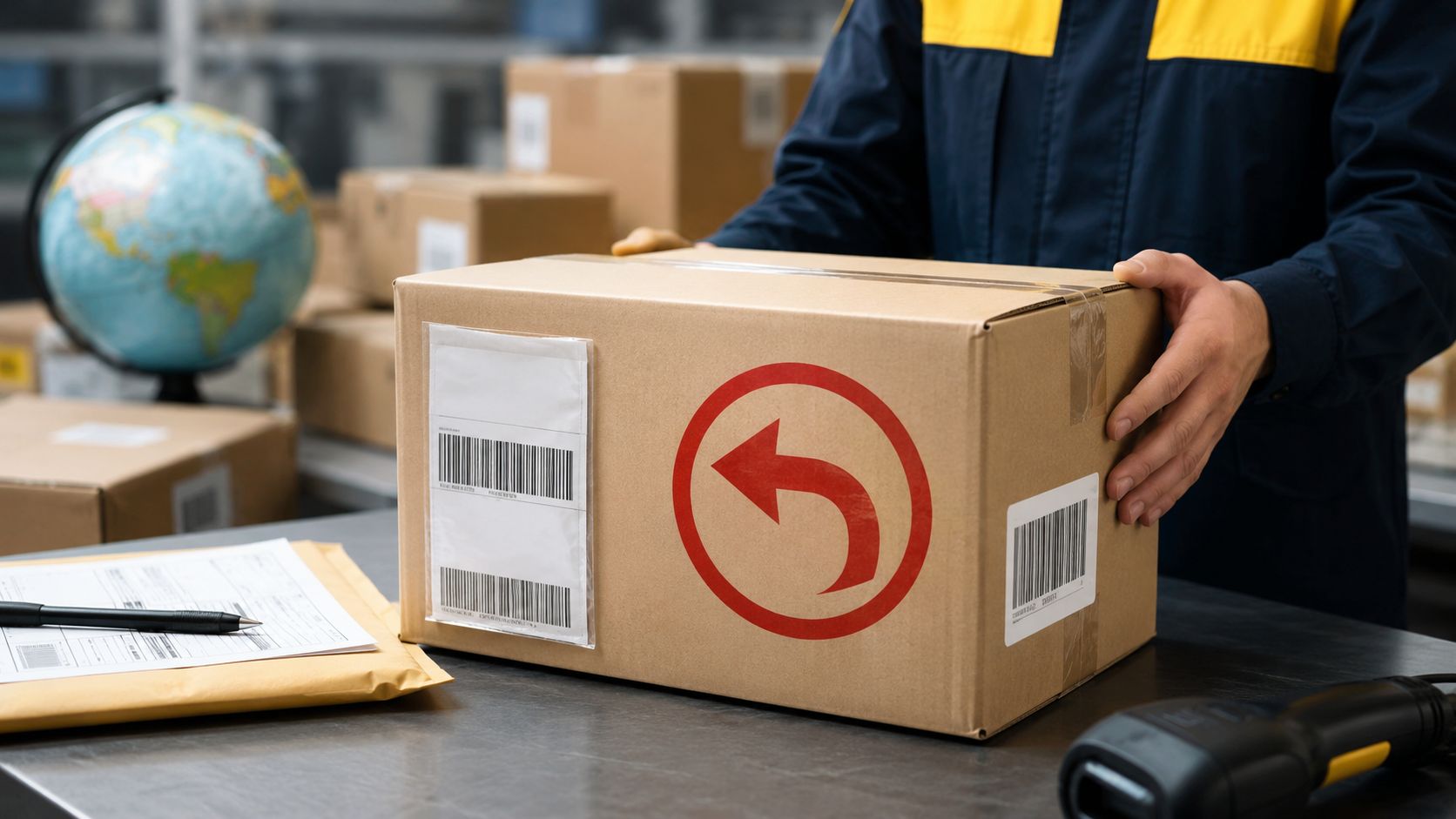
In tracking an international package, the status item returned to sender always looks alarming. Yesterday, the shipment was on its way to the recipient, and today the tracking says it is being returned. The reason may be simple: the storage period has expired, the courier couldn't reach the recipient, the address was incorrectly specified, or customs requested information. The main thing is not to wait several days "for reliability." The sooner you check the details and contact the delivery service, the higher the chance of saving the shipment before the return flight.
What item returned to sender means in tracking
The phrase item returned to sender translates as "the shipment has been returned to the sender." The post office, courier service, or logistics operator assigns this status when they stop delivery to the recipient and initiate the return route.
In tracking, similar marks may look like this:
-
return to sender;
-
returned to sender;
-
item is being returned to sender;
-
parcel returned to sender;
-
delivery failed, returned to sender.
The meaning is the same: the package is no longer moving to the addressee. It is being sent back through the logistics chain. Sometimes the process is already irreversible, but not always. If the shipment is still at the post office, warehouse, or customs zone, it can be intercepted.
Why the package is returned to the sender
International delivery has many checkpoints: acceptance, export, import, customs, sorting, post office, courier delivery. At each stage, the system checks the address, documents, storage periods, and contents. Any failure can send the package back.
Common reasons:
-
Error in the address.
An incorrect postal code, house number, apartment, region, or recipient's name hinders delivery. For the post office, this is not a minor issue, but a reason to return the shipment. -
Storage period has expired.
The package arrived at the post office or pickup point, but it was not collected. Each service has its own storage limit: somewhere a few days, somewhere up to a month. -
The courier could not deliver the shipment.
The recipient was not home, the phone was silent, and the re-delivery was not agreed upon. After several attempts, the route is closed. -
Customs requested information.
Passport details, a receipt, a description of the goods, an invoice, or proof of value may have been required. If no response is received, the shipment goes back. -
Contents raised questions.
Batteries, liquids, aerosols, medicines, dietary supplements, electronics, branded items without proper documentation often undergo additional checks. -
The recipient refused the package.
In this case, the operator records the refusal and processes the return to the sender. -
Sorting failure.
The tracking sometimes glitches: a bag is scanned incorrectly, the status is delayed, the system picks up the wrong stage. This happens with logistics.
When else can you stop the return
Everything depends on the actual location of the package. The status item returned to sender does not always mean that the shipment has already left or is on its way back.
| What is visible in tracking | What it means | What to do |
|---|---|---|
| The package is still at the post office | The return may have just been initiated | Urgently call the post office |
| Status appeared after customs | Documents or data were insufficient | Contact the carrier and customs broker |
| There was an unsuccessful delivery | The courier did not deliver the shipment | Request a re-delivery |
| There is a mark export back | The package is already on its way back | Write to the sender |
| The status is strange, without reasons | A scanning error is possible | Check the tracking on official websites |
If the shipment is still physically in the recipient's country, there is a chance. If the tracking already indicates arrival in the sender's country, returning it to delivery is almost impossible.
What to do in the first 24 hours
Act quickly. In logistics, a day of waiting can easily determine the fate of the package.
Check the tracking on different websites
Do not rely only on one aggregator. Such services are convenient, but they sometimes pull data incorrectly or with delays.
Check the tracking number:
-
on the website of the sender's country post;
-
on the website of the recipient's country post;
-
in the courier service app;
-
in the personal account of the store or marketplace;
-
through the carrier's support.
One service may say item returned to sender, while another will show the exact reason: "storage period expired," "incorrect address," "documents expected," "unsuccessful delivery attempt."
Call the delivery service
The chat often responds with templates. A call is faster.
Prepare the tracking number, full name, address, phone number, and date of the last scan. Ask directly: has the package already gone back or is it still at the warehouse, sorting, or post office? Can storage be extended, a resend arranged, the address corrected, or a re-delivery ordered?
Speak briefly and to the point. It is easier for the operator to help when you mention the status, date, and required action.
Write to the sender
The sender often sees more data, especially if the delivery was arranged through a commercial carrier. They may have access to the application, invoice, insurance, and the logistics internal account.
In the email, specify:
-
tracking number;
-
date the status appeared;
-
tracking screenshot;
-
request to clarify the reason for the return;
-
desired solution: re-sending, address correction, or refund.
If the item was purchased on a platform, keep an eye on the buyer protection period. Once the protection expires, it becomes harder to open a dispute.
Can you get your money back
The status item returned to sender does not guarantee an automatic refund. It all depends on the reason.
If the seller specified an incorrect address, poorly completed documents, or sent the item with violations, you can demand a re-sending at their expense or a refund. For example, if the order was placed on a popular Chinese platform, it is useful to study in advance how to open a dispute on AliExpress due to delivery to properly present evidence to the system and guarantee the return of your money for the undelivered item.
If the recipient did not collect the package, made a mistake in the address, or did not respond to customs requests, the seller may withhold the delivery. Sometimes the return shipping is also withheld.
If the carrier is at fault, evidence will be needed: screenshots of the tracking, support responses, receipts, correspondence, confirmation of the correct address. Without facts, the dispute turns into an argument, but with facts, it is resolved faster.
How to prevent a return next time
Most returns start with small mistakes. They can be easily avoided in advance.
Check before ordering:
-
the address is written in Latin letters if the store is foreign;
-
the postal code is taken from the official database;
-
the house number, building, and apartment are fully specified;
-
the phone number is written with the country code;
-
the full name matches the documents if customs is needed;
-
there are no missed emails from the carrier;
-
the item is allowed for import;
-
the tracking is checked after arrival in the country.
After import, it is better to monitor the package more frequently. It is at this stage that customs requests, courier attempts, storage at the post office, and the first signs of return arise.
Short action plan
If you see item returned to sender, do the following:
-
Check the tracking on official websites.
-
Find the last country and city of the scan.
-
Call the delivery service.
-
Clarify the reason for the return.
-
Ask if the return shipment can be stopped.
-
Write to the sender and attach a screenshot.
-
Save all support responses.
-
Open a dispute if the order protection period is nearing its end.
Not every return can be canceled. But if the package has not yet left on the return flight, a quick call and a support request can sometimes resolve the issue. The main thing is not to wait for the tracking to update itself. Time is against the recipient for packages in return.