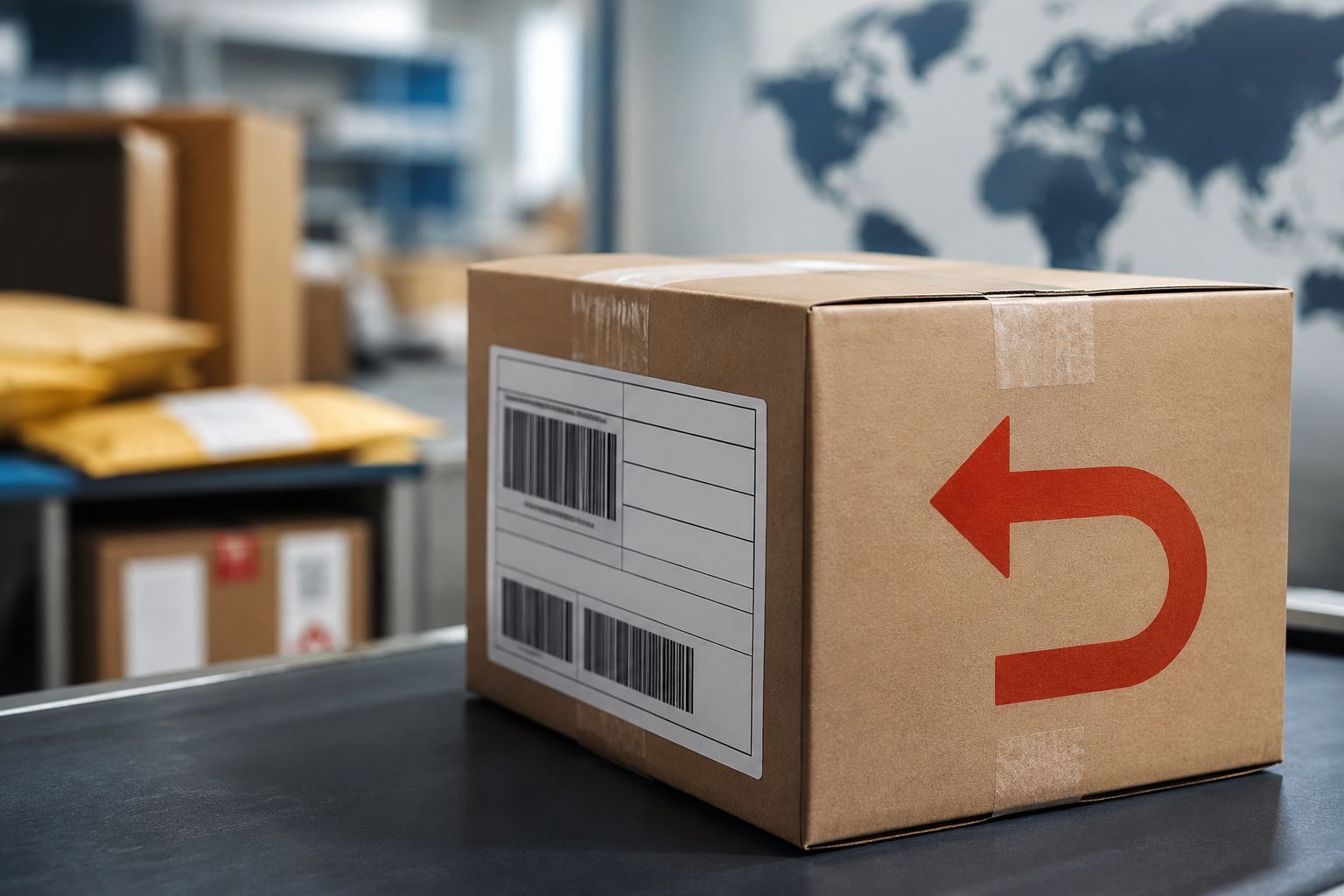
The label Item returned to sender in tracking means that the delivery service has stopped the movement of the parcel to the recipient and initiated a return to the sender. In simpler terms, the order has been turned back. This can happen either in the recipient's country or earlier—at sorting, customs, or in a transit hub.
There is no need to panic prematurely. Sometimes the return is caused by a simple error in the address, an expired storage period, or an unsuccessful delivery attempt. But it is better to act immediately: check the tracking history, contact the carrier, and inform the seller.
[Image: Tracking screen of the parcel with the status Item returned to sender and a return arrow]
What Item returned to sender means in tracking
The literal translation of the status is “the shipment has been returned to the sender.” The wording may appear in different variations:
-
Return to sender;
-
Returned to sender;
-
Item being returned to sender;
-
Shipment returned;
-
Undeliverable — returned to sender;
-
Returning to origin.
The meaning of these entries is the same: the courier or postal service no longer plans to deliver the shipment to the specified address. The parcel is going back or has already been delivered to the person who sent it.
You need to look not only at the last line of the track but also at the events before it. For example, the mark “Delivery attempted” indicates an unsuccessful delivery, while “Insufficient address” indicates an incomplete address. The entry “Unclaimed” often means that the recipient did not pick up the order from the post office or parcel locker.
Why the parcel is being turned back
The reason for the return to the sender is usually indicated next to the status or in the previous event. If there is no explanation, it can be requested from the carrier's support.
Error in the address
One incorrect digit in the postal code, a missing apartment number, or a typo in the street name can disrupt the delivery. In international shipments, there is another problem: the address is written in Cyrillic, while the local sorting system can only read Latin characters correctly.
The carrier sometimes clarifies the data by phone. If the recipient's number is incorrect or the subscriber does not answer, the parcel may be sent back.
The recipient did not pick up the shipment
Each post office and parcel locker has a storage period. It depends on the country, carrier, and type of delivery. After it expires, the system automatically processes the return.
A common situation: the notification did not arrive, the track was not updated for a long time, and the order had been sitting in the pickup point for several days. Therefore, it is better to check international parcels by tracking number yourself, without relying solely on SMS.
The courier could not deliver the parcel
The courier may not have found the recipient, could not get into the entrance, or could not reach them by phone. Some services make several delivery attempts, while others leave the order at the post office after the first failure. If it was not possible to pick it up in time, a return status appears.
The customs did not clear the shipment
The parcel may be turned back due to a prohibited item, incorrect declaration, missing documents, or unpaid duties. The risk is higher when sending batteries, liquids, medicines, food, cosmetics, and devices with radio modules.
A customs return does not always mean confiscation. More often, the cargo is simply sent back, although the journey may take several weeks.
The packaging or label is damaged
If the box has fallen apart, the barcode has worn off, or the address label has come off, sorting will not be able to determine the route. Employees will try to restore the data. When this is not possible, the shipment is returned to the return address.
The sender requested the return
The seller may withdraw the order due to an error in the warehouse, suspicion of fraud, cancellation of payment, or resending one item. This scenario is less common, but it cannot be ruled out.
Can the return be stopped
There is a chance as long as the parcel is at the local post office and has not physically left for the return journey. After it has been handed over to the return flow, it is much more difficult to intercept.
| Situation | What can be done | Probability of stopping the return |
|---|---|---|
| The parcel is still at the post office | Call the carrier and ask to extend storage | High |
| Part of the address is missing | Provide the full address and recipient's documents | Medium |
| The shipment has gone through reverse sorting | Submit a request for interception | Low |
| The parcel has left the recipient's country | Wait for delivery to the sender | Practically zero |
| The return was initiated by customs | Clarify the reason and the procedure for submitting documents | Depends on the violation |
When contacting support, prepare the tracking number, full name, address, phone number, and a screenshot of the tracking history. Do not limit yourself to the question “where is the parcel.” Ask directly: can the Return to sender be canceled and is interception of the shipment available.
What to do for the recipient
The order of actions depends on the place of purchase, but the basic algorithm is almost always the same.
-
Open the full tracking and find the event after which the return to sender appeared.
-
Check the address, postal code, phone number, and recipient's details in the order.
-
Contact the carrier. It is better to use local support, which sees internal scans and courier comments.
-
Write to the seller and attach a screenshot of the status Item returned to sender.
-
Do not close the dispute and do not confirm receipt of the goods.
-
Monitor the buyer protection period on the marketplace.
If the return can no longer be canceled, you will have to wait until the sender receives the parcel. After that, the seller can arrange for a reshipment or a refund.
[Image: The recipient contacts the delivery service and checks the tracking number on a laptop]
Who pays for the reshipment
It all depends on the reason for the return. When the seller made a mistake in the address, incorrectly filled out the declaration, or sent a prohibited item, the reshipment is usually paid by them. If the buyer provided incorrect information or did not pick up the order, the seller may withhold the shipping cost.
Before making an additional payment, request confirmation of the reason for the return. One phrase from the seller is not enough. You need data from the tracking, a response from the carrier, or a photo of the returned label.
On marketplaces, the dispute service makes the decision. Screenshots of the track, correspondence with the post office, and the order card will help prove that the delivery failed not due to your fault.
When will the money be refunded
The status Returned to sender does not itself trigger an instant refund. The seller often waits for the actual receipt of the parcel and verification of its contents. The international return route may take longer than the initial delivery.
Do not agree to wait indefinitely without strict guarantees from the seller. Be sure to check the dispute deadline on the platform. If the order protection on AliExpress is ending and the parcel has not yet arrived (or has gone for return), do not delay your actions. Feel free to open an official inquiry with the reason “item not received” and attach screenshots of the tracking history, where the initiated return route is clearly visible.
If you paid by credit card, there is still the option of a chargeback, but it is used after attempting to resolve the issue with the store or platform. The bank will request evidence: receipt, order description, correspondence, and shipment movement history.
Is it normal for the status to be stuck and not change?
On the return journey, parcels are often scanned less frequently. The track may be silent for 7–14 days, especially between countries. Sometimes reverse logistics go through a cheap channel without detailed intermediate marks.
It makes sense to report a missing parcel if there are no updates longer than the carrier's control period. The request can be submitted by the recipient, but many postal services only accept a full complaint from the sender. Therefore, it is better to involve the seller right away.
How to reduce the risk of a repeat return
Before a new shipment, check the data character by character:
-
first and last name as in the document;
-
postal code;
-
region, city, street, house, and apartment;
-
phone number with country code;
-
address written in Latin;
-
limits and customs rules of the country;
-
storage period at the chosen pickup point.
Ask the seller to send a photo of the address label before handing over the order to the carrier. Such simple control helps to notice a mistake while still at the warehouse.
The status Item returned to sender does not mean that the parcel is lost. It shows a specific direction of movement—back to the sender. First, find out the reason, then try to stop the return through the carrier. If the train has already left, document the tracking, inform the seller, and monitor the dispute deadlines. This way, the chances of getting a refund or receiving a reshipment will be significantly higher.